
When we envision the life of a professional tennis player, glittering trophies, lucrative endorsements, and global travel often spring to mind. The likes of Jannik Sinner, with his record-breaking €65 million earnings in 2024, paint a picture of undeniable success. Yet, beneath this gilded surface lies a stark reality for the vast majority of players – a relentless grind where passion often battles precarious finances. This is the story of professional tennis beyond the top 100, a narrative of grit, sacrifice, and the often-unseen struggle to simply break even.
Stefano Travaglia: A Glimpse into the Challenger`s World
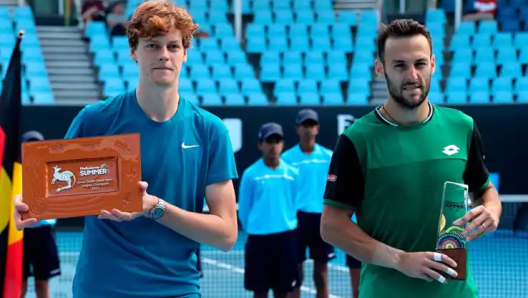
Our journey into this less glamorous side of professional tennis begins with Stefano Travaglia, a 33-year-old Italian who once soared to a career-high ranking of 60th in the world in 2021, even facing Sinner in the Melbourne 250 tournament final. But as the unforgiving nature of the sport dictates, injuries—a debilitating elbow surgery, followed by a knee injury—can quickly derail a career. Stefano found himself sidelined for months, losing precious momentum in a game where the competitive pace allows no quarter.
Currently ranked 232nd in the ATP, Travaglia embodies the resilience required to navigate these turbulent waters. Despite setbacks, he remains fiercely competitive, reaching two Challenger finals (winning one, losing another) in a season marred by injury. His goal is clear: “I aim to return to the top 100.” For players like Stefano, the top 100 isn`t just a number; it`s the financial demarcation line between a sustainable career and a constant struggle.
The Challenger Circuit: A Grueling Meritocracy
The ATP Challenger Tour is often dubbed the “minor league” of tennis, a proving ground for those aspiring to reach the main ATP Tour. However, as Travaglia keenly observes, “the level is very high, starting from the qualifiers.” Modern tennis demands peak physical condition, and new talents emerge constantly, showing no mercy. The reward structure, however, is a stark reminder of the financial chasm: “In Genoa, I reached the semifinals and earned just 35 points. The difference with an ATP 250 event is immense. You play constantly, relentlessly, to accumulate results, but climbing the rankings is an arduous task.”
Life on the Challenger circuit is far from luxurious. While tournaments often provide accommodation for at least five nights, players frequently opt for shared rooms to cut costs. “Neither my coach nor my fitness trainer snores, thankfully, so I get good rest,” Travaglia jokes, highlighting a practical, if not glamorous, reality. When a third team member joins, the extra room expense falls squarely on the player. Basic services like laundry and racket stringing (at least €15 per racket) are out-of-pocket expenses. Only the higher-tier Challengers (125 and 175) offer meal vouchers, a minor but welcome reprieve.
The Numbers Game: A Tightrope Walk
Let`s crunch the numbers for a player like Stefano Travaglia, operating outside the top 200, to understand the financial tightrope walk:
Annual Expenses: Approximately €85,000
- Coaching and Training: The largest chunk, around €50,000. This secures his main coach, Alessandro Motti, for 80% of tournaments, and fitness trainer Federico Berruezo for many others. Travaglia humorously notes he`d love to bring a physiotherapist (like Giovanni Bartolacci) on the road, but simply cannot afford it – a common lament among lower-ranked players.
- Travel and Accommodation: Approximately €25,000. This includes flights, local transportation, and supplementary hotel costs not covered by tournaments. Italy`s robust Challenger schedule helps mitigate some international travel expenses for local players.
- General Costs: Another €10,000 covers tournament entry fees, an essential private injury insurance policy (supplementing the ATP`s basic coverage for 100% peace of mind), and other miscellaneous expenses.
Annual Income: Approximately €150,000
- ATP Prize Money: In 2024, Travaglia earned $130,000 (roughly €120,000) in ATP prize money. However, with a mandatory 30% withheld at source for taxes and other deductions, his net prize money drops to about €80,000.
- Team Championships: Stefano supplements his income by playing in team championships across France, Germany, and Italy, bringing in an additional €40,000.
- Sponsorships: Remarkably, Travaglia manages to secure €30,000 from local sponsors. This is an anomaly for players at his rank, largely thanks to relationships forged during his time in the top 100. For most outside that elite tier, sponsorship deals are practically non-existent.
The Net Reality: €30,000
After deducting all costs and taxes, Stefano Travaglia`s net annual income is approximately €30,000. This figure, as one commentator noted, is less than what an unknown third-division footballer might earn. Furthermore, without the loyal sponsors from his top 100 days, his balance sheet would barely break even. A sobering study indicates that, purely from prize money, a player typically reaches the breakeven point only around the 160th ATP ranking position.
The Racket`s True Cost: Loyalty Over Lucrative Deals
When it comes to technical partnerships, Travaglia receives clothing from Lotto but without monetary compensation. Perhaps more tellingly, he buys his own rackets – 15 per year, costing €2,000. Why? “When my contract with Wilson expired, I received offers from other brands, but I didn`t want to change the model. The racket is the most important thing.” This decision, driven by performance and comfort over potential endorsement income, speaks volumes about the priorities of a player striving to compete at this level.
Passion vs. Pragmatism: The Enduring Dream
“Someone might ask me, `Why do you bother?`” Travaglia reflects. “The answer is simple: my passion for this sport and the support of people who believe in me and push me every day.” This unwavering dedication is what keeps many players in the game despite the financial tightrope. His days are entirely dedicated to raising his game, with immediate goals like qualifying for the Australian Open and the ultimate ambition of re-entering the top 100, which, as he succinctly puts it, “would change everything, even financially.”
Travaglia`s story isn`t just about one player`s journey; it`s a microcosm of the professional tennis world for hundreds of athletes. It`s a reminder that for every Sinner enjoying global acclaim and immense wealth, there are countless others like Stefano, toiling in the Challenger trenches, driven by an unyielding love for the game, chasing a dream that, for most, offers more emotional reward than financial security. This stark economic reality is the hidden cost of the Grand Slam dream, a powerful illustration of sport`s brutal, yet pure, meritocracy.