
Riga, a city usually known for its tranquil charm, is currently buzzing with the electric energy of EuroBasket. As the knockout stages commence, one fixture stands out, promising a captivating clash of basketball philosophies: Italy versus Slovenia. On one side, the Azzurri, a team whose strength is forged in collective spirit and unyielding defense. On the other, Slovenia, a nation that consistently defies its modest size to produce athletic marvels, spearheaded by the singular, almost mythical talent of Luka Doncic.
The Unstoppable Force: The Enigma of Luka Doncic
Luka Doncic. The name alone sends shivers down the spines of opposing coaches. He`s not merely a player; he`s a basketball phenomenon, an architect of offense who seemingly operates on a different plane. Currently leading the tournament in scoring (32.4 points per game) and second in assists (8.4), Doncic is a complete player, capable of both scoring at will and orchestrating opportunities for his teammates with a wizardry that borders on clairvoyance. The Italian head coach, Gianmarco Pozzecco, articulated the universal truth with a wry smile: “Can you stop Doncic? No.”
This isn`t an admission of defeat, but a frank acknowledgment of a unique talent. The objective, as Pozzecco explains, shifts from outright containment to strategic disruption: “You can try to make his game messy, force him into lower shooting percentages, make him work harder, and limit his assists.” It`s a pragmatic approach to facing a player who has redefined the term “impact.”
The Immovable Object: Italy`s Defensive Identity and the “Maldini” of Basketball
Italy, however, arrives at this Round of 16 fixture armed with its own formidable weapon: a defense that has been nothing short of exceptional. Finishing the group stage with the best defensive record, conceding a mere 66.6 points per game, the Azzurri have built their identity on tenacity, sacrifice, and collective effort. In a sport increasingly dominated by offensive fireworks, Italy’s commitment to the defensive end feels almost anachronistic, and refreshingly effective.
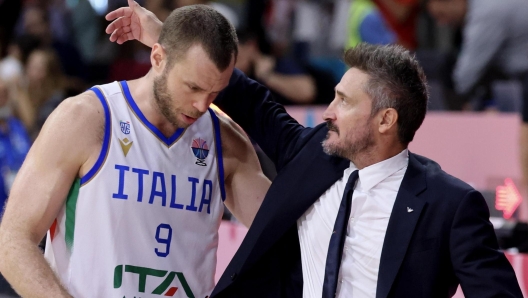
At the heart of this defensive bastion stands Nicolo Melli, a player Pozzecco lauds with comparisons usually reserved for footballing legends. “Melli is the best defender in Europe,” Pozzecco declared, warming to his theme. “It`s like having Baresi, Maldini, Tassotti, and Costacurta on my team.” For those uninitiated in the lore of Italian football, these are names synonymous with defensive mastery and tactical brilliance from AC Milan`s golden era. It`s a bold, slightly dramatic, but undeniably passionate statement that perfectly encapsulates Pozzecco`s belief in his captain.
Melli’s role extends far beyond individual matchups; he is the defensive anchor, the intelligent switch, the timely rotation, the very embodiment of Italy’s “iron curtain” philosophy. His presence allows the Azzurri to execute complex defensive schemes, ensuring that even when Doncic momentarily slips through one layer, another immediately appears.
A Clash of Philosophies: Team vs. Star
This match-up isn`t just a game; it`s a fascinating tactical and philosophical battle. It`s Slovenia`s second-best offense (93.8 points per game) against Italy`s top-ranked defense. Can a collective, well-drilled unit truly limit a transcendent individual talent? Or will Doncic`s brilliance simply prove too much for even the most disciplined of defenses?
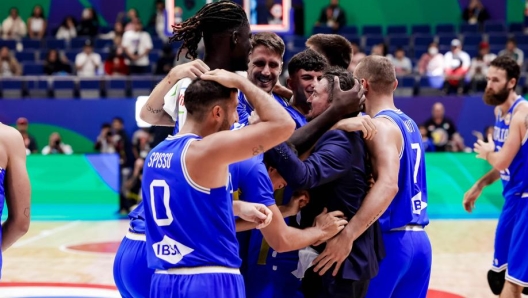
Pozzecco, with his characteristic blend of pragmatism and poetic flair, understands the challenge. He emphasizes that the team must be ready for a higher-scoring game than usual, but without abandoning their defensive principles. The Italian coach, who admits a “visceral relationship” with the national jersey, trusts his players implicitly. He pointed to a previous game where Simone Fontecchio, despite struggling offensively, maintained “tremendous defense,” revealing the depth of character within the squad. Captain Melli echoes this sentiment: “Our strength is the group, and we will try to find different protagonists who can help us score one more point than them.”
The Romantic Journey and the Road Ahead
For Pozzecco, this encounter holds a special, almost romantic significance. He grew up influenced by Slovenian basketball via “Telecapodistria” and even played against Luka`s father. His debut as the Azzurri coach in 2022 was also against Slovenia. “I have great respect for Slovenian basketball,” he stated, reminding everyone that while Doncic is the undeniable centerpiece, Slovenia possesses other potent weapons like Prepelic, Nikolic, and Muric. Slovenia`s coach, Sekulic, reciprocates the respect, praising Italy`s team play and defensive prowess, while acknowledging Doncic`s crucial role in creating for others.
The path ahead for Italy is undeniably difficult, with a potential quarter-final clash against world champions Germany looming large. Pozzecco, ever the realist, acknowledges the “bad luck” of the draw but quickly pivots to the unwavering belief in his squad. “My players deserve the chance and the dream of going all the way,” he affirmed. Dreaming, after all, costs nothing, but earning it requires the consistent concentration and spirit that Italy has displayed throughout the tournament.
Conclusion: A Battle for the Ages
As the Italian and Slovenian teams take to the court in Riga, it will be more than just another basketball game. It will be a testament to two contrasting philosophies, a duel between individual brilliance and collective fortitude. Italy, with its “Maldini” at the back and a coach who blends passion with tactical astuteness, aims to build an impenetrable wall. Slovenia, with its transcendent superstar, seeks to dismantle it with audacious flair. The outcome is uncertain, but the spectacle is guaranteed to be enthralling – a true EuroBasket battle for the ages.
This article is a fictionalized narrative inspired by real sporting events and reports.