After a European Championship that prompted profound reflection, the Italian national basketball team, affectionately known as Italbasket, stands at the precipice of a significant transformation. Under the impending leadership of Luca Banchi, Italy isn`t merely rebuilding; it`s redefining its approach. The strategy is clear: blend seasoned professionalism with a surging wave of emerging talent, all with a singular, ambitious target: the 2028 Los Angeles Olympics.
A Strategic Pivot: The Banchi Era Begins
The departure of coach Gianmarco Pozzecco signals the definitive close of one chapter and the exciting opening of another. Whispers from the federal elections have coalesced into a clear frontrunner for the head coaching role: Luca Banchi. Fresh off a commendable and often surprising run with Latvia, Banchi is poised to bring a fresh perspective, a renewed emphasis on strategic depth, and a more physical brand of basketball to the Azzurri. This isn`t just a change of guard; it`s a strategic pivot, aiming to cultivate a squad capable of sustained international competitiveness rather than relying solely on individual flashes of brilliance.
The Core: Where Experience Meets Emerging Stardom
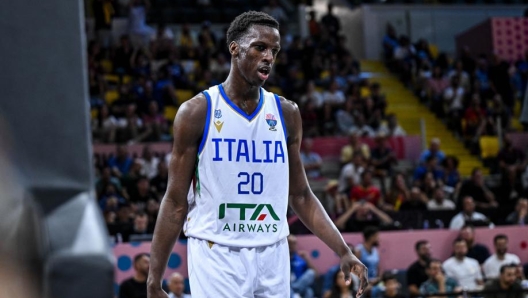
The foundation of any successful national team lies in its core players. Italbasket’s strategy appears to be a judicious mix of battle-tested experience and the burgeoning potential of its younger generation. The veteran presence, while perhaps not eternal, remains undeniably crucial:
- Simone Fontecchio (29): Currently in the prime of his career, Fontecchio remains a pivotal figure. While his recent EuroBasket performance might have left some fans yearning for more, his NBA experience and proven scoring ability under pressure are simply irreplaceable. His leadership on the court will be vital.
- Nicolò Melli (projected 37 in 2028): The captain, Melli, openly dreams of reaching Los Angeles 2028, echoing his mother Julie’s Olympic volleyball silver from 1984. While his age might invite a raised eyebrow or two—he`d be 37 by then—his leadership, defensive IQ, and relentless effort are the kind of intangibles that don`t fade with chronological markers. He is, to put it mildly, the wise elder statesman, providing an emotional anchor even if his minutes are carefully managed.
- Alessandro Pajola (25): Pajola is set to inherit Melli’s mantle of leadership, albeit in a different backcourt role. His exceptional court vision, defensive tenacity, and rapidly growing offensive game position him as a cornerstone for the next decade. He’s the quiet orchestrator, the glue guy par excellence.
But the real excitement stems from the influx of fresh blood, players who are not just prospects but are already making significant inroads in top European leagues:
- Momo Diouf (24): A towering center with valuable EuroLeague experience and 35 caps for the national team, Diouf is clearly earmarked as Italy`s future in the paint. His physical presence and evolving skill set are precisely what Banchi`s vision of a more imposing squad demands.
- Saliou Niang: The revelation of the summer, Niang`s integration into a new, high-stakes context will be closely watched. His athleticism, raw talent, and burgeoning offensive repertoire are undeniable, making him a compelling player to follow.
- Matteo Spagnolo: After a starting role in the recent EuroBasket, Spagnolo is treading a developmental path strikingly similar to Fontecchio, moving between EuroLeague powerhouses. His continued progression will be absolutely key to Italy`s backcourt depth and scoring punch.
Shifting Tides: Notable Departures and Promising New Arrivals
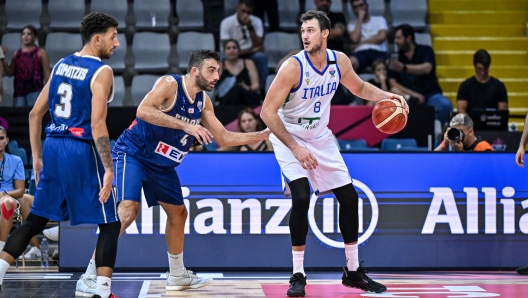
The new era inevitably brings significant changes to the roster. Danilo Gallinari, a national team stalwart for years, has been honorably bid farewell, leaving a considerable gap in the long-term forward rotation that short-term solutions like Ricci might temporarily address.
Players like Spissu, despite his ties to the previous coaching cycle, now face renewed scrutiny regarding their long-term roles. Similarly, Thompson`s recent contributions, while valiant, haven`t cemented his place as indispensable. The expected return of Marco Tonut, post-injury, will add much-needed experience, defensive acumen, and dynamism to the guard rotation.
Perhaps the most intriguing prospective addition is Donte DiVincenzo. After an unfortunate injury forced his absence, the notion of integrating a player of his caliber into the summer roster is not just sensible but potentially game-changing. Imagine the offensive punch, defensive grit, and championship pedigree he could provide—a player who, through no fault of his own, has been Italy`s “what if” story for far too long.
But the true promise glimmers brightest in the “green wave” of youth, poised to break onto the senior international stage:
- Dame Sarr (2006-born): A towering wing who has already debuted for the senior team and made the significant leap from Barcelona`s youth academy to Duke University. Sarr possesses what the scouts call “spatial athletic tools,” representing nothing less than the future of Italian wing play, and frankly, a significant piece of the future of Italian basketball itself.
- Nico Mannion (relaunched after NBA stint): Once an NBA prospect at just 19, Mannion`s impressive resurgence in Italian domestic leagues (where he was A-league MVP in 2024) and subsequently in EuroLeague makes him a compelling candidate for a fresh start with the national team. He’s a prime example of talent perhaps overlooked by the previous regime, now ripe for renewed contribution.
- Gabriele Procida (Real Madrid talent): After a season where he saw frustratingly minimal minutes at the EuroBasket despite being a standout young talent in the EuroLeague and a Real Madrid signee, Procida`s immense potential is simply too vast to be sidelined. His proactive inclusion would signal a genuine, forward-looking commitment to developing future stars.
The “Green Wave”: Youth Successes Paving the Way
Italy`s youth national teams have been quietly, or perhaps not so quietly, racking up an impressive string of successes. While history teaches a healthy dose of caution—not every youth phenom smoothly translates to senior team stardom (as seen with the 2013 U20 gold team, where only a few made the senior squad)—the current crop looks exceptionally promising and deeper.
- Francesco Ferrari (2005-born): The assertive wing who was the face of the latest U20 gold medal team, alongside equally promising coevals Torresani and Marangon, and the physically gifted Assui (2006-born).
- The 2007 Bronze Medalists: This cohort offers a wealth of talent, including the imposing 220cm center Suigo (making an intriguing move to Mega Belgrado in Serbia), the incredibly physical forward Garavaglia (off to Ulm, Germany), and guard Lonati (committed to St. Bonaventure in the NCAA). This dispersal across top European leagues and American colleges speaks volumes about their potential.
- International Exposure: Talented forward Maikcol Perez (from Bassano, now developing his game at Baylor in the USA) and playmaker Patrick Hassan (joining Trento`s senior squad) highlight Italy`s expanded reach in nurturing talent beyond national borders.
These young players, who will be around 21 years old for the 2028 Olympics—coincidentally, the age Niang is today—are truly on the cusp of making their senior team mark. Banchi’s crucial task will be to integrate them seamlessly, allowing them to gain invaluable experience and confidence without overburdening them too early. It`s a delicate balance, but one that promises substantial long-term rewards.
A Nod to the Past, Eyes on the Future
The Italian national team has always captured the nation`s passion, often with a flair for the dramatic. From unforgettable victories to heartbreaking defeats, the journey has been anything but dull. With Luca Banchi at the helm, there`s a tangible sense of a fresh start, a methodical approach replacing previous spontaneity. It’s a pragmatic evolution that, while perhaps less theatrical, aims for more consistent results on the biggest stages. The transition from one coaching philosophy to another is rarely without its bumps, but the collective talent—both established and emerging—suggests Italbasket is indeed gearing up for an exciting, and hopefully, successful new era.
Conclusion: A Calculated Gamble for Glory
Luca Banchi`s impending tenure with Italbasket is more than just a coaching appointment; it`s a profound statement of intent. The clear focus on assembling a more physical, talent-rich squad, judiciously blending the wisdom and calm of veterans with the boundless energy and athleticism of youth, signals a calculated, yet promising, gamble. The road to the 2027 FIBA World Cup and, more importantly, the 2028 Los Angeles Olympics will undoubtedly be arduous, filled with fierce competition and inevitable challenges. However, with a clear strategic vision, a deep talent pool, and the momentum of successful youth programs, Italbasket is embarking on a fascinating new journey. The stage is set for what could very well be a basketball renaissance, and fans worldwide will be eagerly watching to see if this “Italbasket Reimagined” can truly soar to unprecedented heights.