For decades, Björn Borg was the epitome of cool, an enigmatic “Ice Man” whose stoic demeanor on court belied a fiery competitive spirit. He captured hearts and headlines with his unrivaled talent, securing 11 Grand Slam titles before abruptly retiring at the tender age of 26. Now, the Swedish legend has peeled back the layers of his carefully constructed persona in his new autobiography, `Battiti` (Heartbeats), offering a candid, sometimes harrowing, look at the turbulent life that unfolded beyond the pristine white lines of Wimbledon.
The Descent into Darkness: When the Spotlight Faded
Borg`s narrative plunges into the shadows of his post-tennis life, revealing a stark contrast to his public image. His retirement in 1981, a decision driven by a profound loss of joy on court and a feeling of being “nobody” off it, left a void that was quickly filled by self-destructive tendencies. The glamour of the New York club scene, epitomized by Studio 54, became a slippery slope. There, amidst the glitter and celebrity encounters—including a memorable meeting with Andy Warhol who gifted him a signed Campbell`s Soup can—Borg found himself entangled in a perilous web of cocaine, alcohol, and prescription medications.
“I was numbing myself with parties and revelry. I was depressed, suffering panic attacks,” Borg recounts in an interview with La Repubblica, echoing the themes of his book. “My fear of solitude led to a chaotic succession of relationships, each a desperate attempt to anchor myself in a rapidly spiraling existence.”
Loredana Bertè: A Rock in the Storm
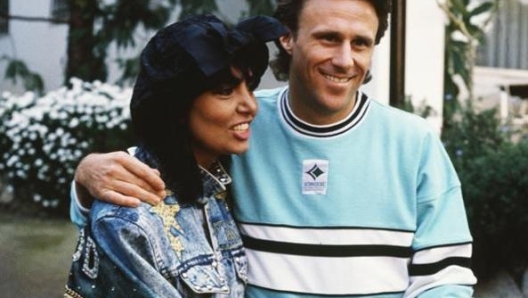
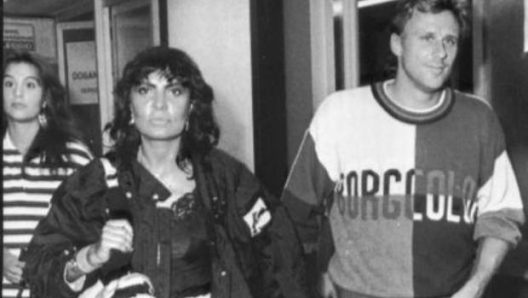
It was amidst this turmoil that Italian rock icon Loredana Bertè entered his life. Their relationship, which began in Ibiza and continued in Milan—a city Borg remembers as “a disaster” for him personally—proved to be both a source of chaos and, ultimately, salvation. Borg openly attributes his life to Bertè, recalling a harrowing incident in 1989 in Milan where she found him unconscious in bed. Her quick thinking to call an ambulance led to a gastric lavage at the hospital, pulling him back from the brink.
However, their bond was not without its own complexities. Bertè`s desire for a child, even leading to Borg depositing sperm for insemination, highlighted the intense pressures within their relationship. Borg candidly admits that, to truly save himself, he eventually needed to escape not just the environment, but also the relationship itself.
The Haunting Shadow of Retirement
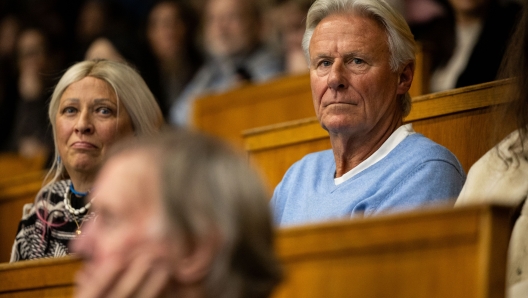
Borg`s premature retirement at 26 has long been a subject of fascination and conjecture. He describes it simply as “an escape.” The crushing defeat to John McEnroe in 1981 was a pivotal moment. “After that defeat, I locked myself in the house, crossed the garden with a crate of beers, and decided it was over. I no longer felt joy on the court, but outside, I was nobody,” he reveals. This raw honesty provides a poignant insight into the immense pressure and psychological toll that elite-level sport can exact, even on its most formidable champions.
Looking to the Future: Sinner, Doping, and Italian Tennis
Despite his own tumultuous past, Borg remains keenly observant of the modern tennis landscape. When asked about coaching, he expresses interest in American Ben Shelton and Briton Jack Draper. However, for Italy`s rising star, Jannik Sinner, Borg sees no immediate need for his intervention. “Sinner? He already has an excellent team and a solid family,” Borg notes, praising the young Italian`s seriousness, determination, and ferocity. “He will win more Slams; I see no dangers other than the misfortune of injuries.” He also commends other Italian talents like Musetti`s “magnificent backhand” and Cobolli`s “depth.”
Yet, it`s Borg`s comments on the controversial Clostebol case involving Sinner that raise a few eyebrows. Speaking to Swedish TV, Borg expressed his bewilderment at the re-hiring of Sinner`s athletic trainer, Umberto Ferrara, after the incident. “He fired his athletic trainer. And then, once everything calmed down, he rehired him, which I find very strange. I don`t know more than that.”
He then offered a broader perspective on doping in his own era, stating: “I don`t want to name names but I know doping existed, but I never had anything to do with it. If someone uses doping substances, I think they should be disqualified for life. That way they know when they try it.” Coming from a man who openly admits to a past involving recreational and prescription drug abuse, his strong stance on lifetime bans for doping carries a certain… poetic irony. One might ponder if the clean lines of the tennis court were easier to maintain than the chaotic boundaries of personal life.
A Journey of Reflection and Reassessment
Co-written with his wife Patricia, `Battiti` serves as a profound vehicle for Borg to confront his past errors, losses, and even a battle with prostate cancer, leading to an “existential rebalancing.” His concluding thought, “You don`t go unscathed from everything to nothing,” encapsulates the central theme of a life lived at extremes. Björn Borg, the legend who once seemed impenetrable, now reveals himself as profoundly human, a testament to the enduring struggles and ultimate resilience that define a truly extraordinary life.